Skip to the page
Honest CarrolltonWater Damage RestorationCall (678) 270-2458

Basements, crawl spaces and low rooms

Flooded Basement and Crawl Space Help

Water across a basement floor, standing in a crawl space or collecting in a low room after rain. Stay out of it, shut off power only from dry ground, and call (678) 270-2458 to describe it.

Call (678) 270-2458
What you may be seeing

  • A puddle spreading from one wall or corner of the basement
  • A sump pump that keeps running without a break, or one that has stopped making noise
  • Water standing in the crawl space when you look in at the access panel
  • A damp line on concrete or block walls, with a musty smell
  • Boxes, furniture legs or a water heater sitting in a wet spot
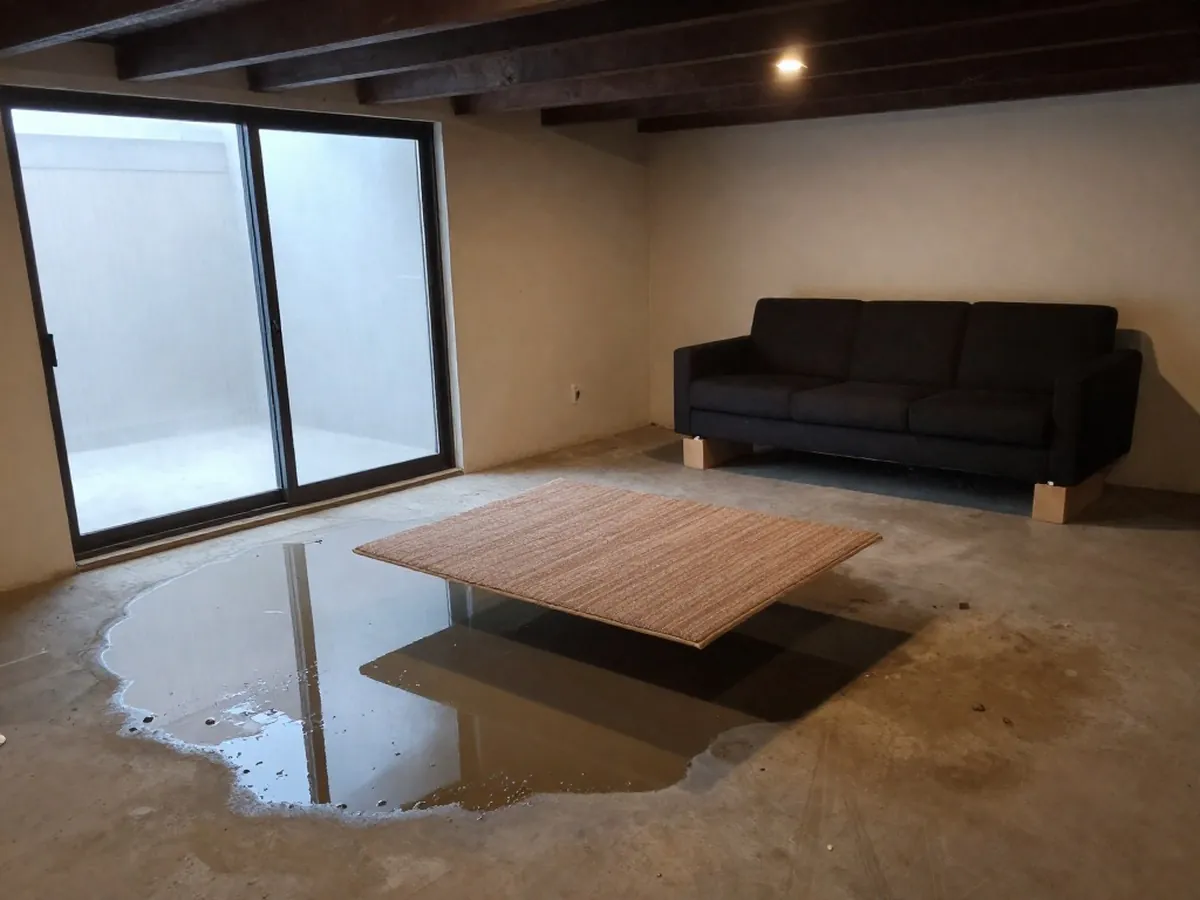
Standing water across a walk-out basement floor by the sliding door

What the photo shows

What the flooded basement photo shows

The photo shows a bare concrete basement with exposed beams and a sliding glass door. A dark couch stands on wooden blocks, and a puddle spreads across the floor toward it. Furniture lifted onto blocks is common in a scene like this, and nothing in the picture says how deep the water is or where it started.

Walk away and get help if

  • Water at the electrical panel, outlets or a plugged-in water heater: do not step in. If dry ground does not reach the main switch, leave it alone and dial 911 when anything sparks or burns.
  • Water still rising after heavy rain, or moving across a doorway: stay upstairs. The National Weather Service says six inches of fast-moving water can knock over an adult.
  • A gas smell, or a gas appliance standing in water: leave the house and phone Atlanta Gas Light at 877-427-4321 from outside, or dial 911.
  • A wall that bows inward or a new crack while water is in the room: stay out of the basement and dial 911 if it gives way.

Safe things to look at

These are looks and touches, nothing more. Stay with the ones that feel comfortable, and skip any that put you near water, wiring or a ladder.

  • Mark the water level on a wall or post with tape and write the time, then look again later to see whether it has moved. The University of Missouri's pumping method starts with the same mark.
  • Go outside and see where each downspout empties and whether the gutters are clear.
  • If there is a sump pump or floor drain, look at whether the pump is running and the discharge line is still attached outside.
  • Photograph the water line and whatever was stored in it.

What often sits behind it

  • Soil that slopes toward the foundation. UGA's checklist asks for about six inches of fall over six to ten feet.
  • Downspouts that drop water at the wall rather than six to ten feet away
  • A sump pump or floor drain that stopped working
  • A water heater, washer or supply line leaking onto a low floor
  • A crawl space with bare soil. UGA lists a 6-8 mil vapor barrier.

When basement water cannot sit

  • The water rises between two looks at the tape mark.
  • The water heater, furnace or panel sits in the wet area.
  • The house has been closed up and wet for several days. The CDC says to assume the home has mold, and to open it up and ventilate for 30 minutes or more before anyone stays inside.

Pumping and cleanup missteps

  • Using an electric pump that draws from the house wiring. The University of Missouri says to use a gas pump run outside, or one plugged into an outdoor line.
  • Pumping the whole basement empty in one go.
  • Running a gasoline engine inside a house or garage. The CDC wants them outdoors, with at least 20 feet between the engine and every door, window and vent.
  • Laying new flooring over a slab that still reads wet. The EPA describes a plastic sheet test left in place about 16 hours.

Winter rain and low rooms

  • The Carrollton station's 1991-2020 normals put December at 5.09 inches, January at 5.00, February at 5.30 and March at 5.59.
  • Those four months average 1.4 to 1.9 days apiece with an inch of rain or more.
  • UGA Extension asks for downspouts that run 6 to 10 feet out and soil that falls about 6 inches over that distance.

Questions, answered briefly

How urgent is water in the basement?

Water near the panel or still rising is an 8 to 10 on the checklist: stay upstairs. A steady, unchanging puddle on a clear floor is a 4 to 7. A damp patch that dried by morning is a 1 to 3, worth a photo and a look at the downspouts.

Can the water be pumped out all at once?

University of Missouri Extension warns that removing it all at once might cause serious structural damage, because the water inside pushes back against the soil outside. Its method drops about a foot, marks the new level and waits overnight.

Are basements outside Carrollton covered?

The line also takes calls from water damage in Villa Rica and Whitesburg water damage. Have the street address, a rough depth of water and the sump pump's state ready, then call (678) 270-2458.

Basement work and the town office

Moving a water heater or panel out of a wet space touches plumbing and electrical rules. Each town's office, plus eight questions worth asking a crew, is set out on Before you hire.

The job next door