Skip to the page
Honest CarrolltonWater Damage RestorationCall (678) 270-2458

Standing water and soaked floors

Water on the Floor in Carrollton

Carpet that squishes, a dark patch creeping across hardwood, or an inch of water in one room: once the source is shut off, call (678) 270-2458 and describe the floor.

Call (678) 270-2458
What you may be seeing

  • Carpet that squishes underfoot, even in a room that looks dry from the doorway
  • A dark patch on hardwood or laminate that grows toward the baseboards
  • Baseboards that look swollen, or drywall that feels soft just above the floor
  • A damp, sour smell in a closed room that was fine yesterday
  • Water pooled in a low corner after a washer, tub or tank overflowed
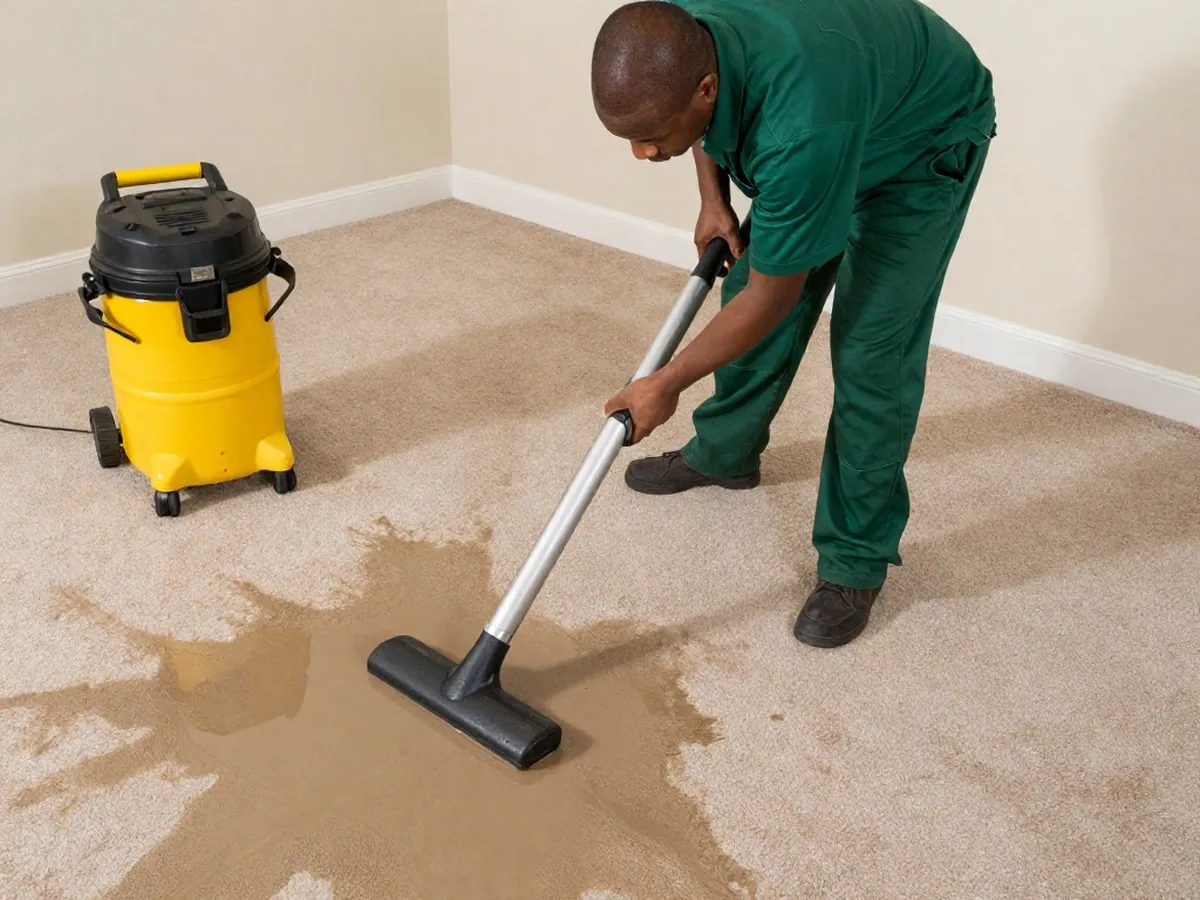
Technician pulling an extraction wand across wet carpet

What the photo shows

A wet vacuum, a wand and a soaked carpet

The photo shows a technician drawing a wand with a squeegee head across beige carpet, with a hose running back to a wet vacuum. The dark patch is water held in the carpet and probably in the pad beneath it. A wet vacuum lifts what is on and near the surface; it cannot tell anyone how much is left in the pad or the subfloor, which is why a moisture reading comes later.

Walk away and get help if

  • Water touching outlets, cords or the electrical panel: do not step in. If the main switch is only reachable through the water, leave it alone, call an electrician from outside, and dial 911 at a spark or the smell of burning.
  • A gas smell in the house: leave right away, keep lights and switches alone, and phone the gas company from outside. Georgia 811 lists Atlanta Gas Light, 877-427-4321, for Carroll County; 911 also works.
  • Water that smells like a sewer, or that came up through a drain: keep the room closed to children and pets, and read the sewage page before touching anything.
  • A ceiling over or next to the wet area that bulges or drips: do not go back into that room, and dial 911 if it starts to give way.

Safe things to look at

These are looks and touches, nothing more. Stay with the ones that feel comfortable, and skip any that put you near water, wiring or a ladder.

  • Find the source and close the valve to it: under the sink, behind the toilet, or the main valve outside.
  • Stand in the doorway and look for outlets, cords and appliances sitting in or near the water. Leave those alone.
  • Photograph the room before anything is moved: wide shots first, then close ones of the wettest spots.
  • Press the back of your hand to the wall just above the baseboard and mark with tape where the dampness stops.

What often sits behind it

  • A washer hose, dishwasher line or tub overflow that ran while nobody was home
  • A supply line that split inside a wall or under a floor
  • Heavy rain pushing water in under a door or through a window well
  • A water heater tank that gave out at the seam
  • A toilet supply line or seal that seeped for weeks before it let go

Signs the carpet cannot wait

  • Water is still arriving: a running supply line, a leaking appliance or a downspout dumping beside the wall.
  • The carpet or drywall has been wet for a day or more. UGA Extension warns that mold may begin growing before a full day has passed after a flood, and that non-structural materials which cannot be dried within 48 hours are thrown out.
  • Someone in the house has asthma or a weak immune system. The EPA tells those people to stay away from moldy sites.

Habits that make a wet floor worse

  • Plugging in a vacuum or fan while standing in water. NDSU Extension asks for a ground fault circuit interrupter on wet/dry vacuums and says not to stand in water when using electrical equipment.
  • Sealing a flooded wall cavity or painting a wet surface. The EPA says to wait until materials are completely dry on the inside.
  • Running the heat or air system to dry out a house after a flood when the system itself got wet. The EPA says not to.
  • Moving or throwing out the wet things before they are photographed. The state insurance commissioner's office wants pictures taken first, and damaged items saved for the adjuster.

Rain by the month in Carrollton

  • In the 1991-2020 normals NOAA publishes for Carrollton, March is the wettest month at 5.59 inches, with February at 5.30, December at 5.09 and January at 5.00.
  • May through October runs lighter, from 3.66 inches in October to 4.45 in July.
  • The year adds up to 53.48 inches, with 16.3 days bringing an inch or more.

Questions, answered briefly

How urgent is a soaked carpet or floor?

Water that is still spreading but nowhere near wiring scores a 4 to 7 on the checklist. The EPA's mold guide sets a 24 to 48 hour target for drying wet areas, so call (678) 270-2458 and describe the floor early. Water near outlets is an 8 to 10.

How long can carpet stay wet before mold is likely?

UGA Extension's mold circular says mold can be avoided if carpet is dried within 48 hours of getting wet, and that padding which has gone moldy is always thrown out. NDSU Extension gives a wider range for wet materials in general: one to three days.

Who takes a water call from Villa Rica or Whitesburg?

Calls from Carrollton, water damage in Villa Rica and Whitesburg water damage all reach the same line. Call (678) 270-2458 with the street address, the wet room and what the floor is made of.

Questions to settle before anyone starts

A flooded room sometimes means electrical or plumbing repair on top of drying. The town offices and a list of questions for any crew sit on Before you hire.

The job next door